Win Big On Horse Racing And More At Pokerstars Sports India – Although every effort has been made to follow the rules of citation style, there may be some inconsistencies. Consult the appropriate style guide or other sources if you have any questions.
Encyclopedia Editors Encyclopedia editors oversee subject areas in which they have extensive expertise, whether they have years of experience working with that content or from graduate school. They write new content and review and edit content they receive from contributors.
Win Big On Horse Racing And More At Pokerstars Sports India

A horse has died after a race at Churchill Downs, the eighth fatality in recent weeks at the home of the Kentucky Derby.
Icebath Wins $2m Invitation At Randwick
The death of seven horses at home in the Kentucky Derby has reignited the debate over horse racing safety.
Horse racing’s Triple Crown moves to Preakness, where horse death at Churchill Downs casts shadow
Two more horses died hours before the 15-1 shot. Mage won the Kentucky Derby on Saturday, ending a rocky stretch that saw a total of seven deaths and cast a shadow over the 149th edition of the world’s most famous race.
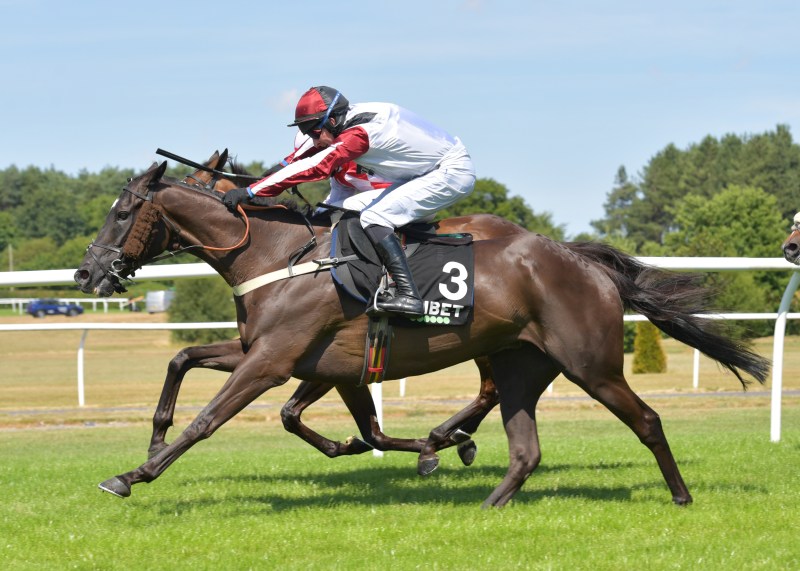
Horse racing, the sport of running at speed with horses, mainly thoroughbreds with riders on foot or standard bloods with horses driving vehicles with drivers. These two types of racing are called flat racing and harness racing respectively. Some flat races, such as steeplechase, point-to-point and steeplechase, involve jumping. This article is limited to thoroughbred racing on flats without jumps. Racing on flats with horses other than thoroughbreds is described in the article Quarter Horse Racing.
More Ground’ Should Benefit Six Shooter In Southwest Stakes
Horse racing is one of the oldest sports and its basic concept has practically not changed over the centuries. It has evolved from a primitive contest of speed and endurance between two horses to a spectacle involving large fields of runners, sophisticated electronic control equipment and large sums of money, but its essential characteristic has always been the same: the horse that comes first. winner. In the modern era, horse racing has evolved from a recreational class into a huge public entertainment activity. However, in the first decades of the 2000s, the sport’s popularity declined significantly.
Knowledge of the first horse race was lost in prehistory. In the Olympic Games in Greece BC. In the years 700–40, both four-legged chariot and horse races were held. Horse racing, both with chariots and horses, was a well-organized public entertainment in the Roman Empire. The history of organized racing in other ancient civilizations is not so firmly established. Organized racing probably began in countries such as China, Persia, Arabia and other countries in the Middle East and North Africa, where early horse racing was highly developed. From here also came the Arabian, Barb and Turkish horses that contributed to early European racing. Such horses became known to Europeans during the Crusades (XI-XIII centuries), from where they brought these horses back.
Racing began in medieval England, when horses for sale were competed by professional riders to demonstrate the horses’ speed to buyers. During the reign of Richard the Lionheart (1189–1199), the first known racing purse, 40 pounds, was offered for a race over a 3-mile (4.8 km) course with knights as riders. In the 16th century, Henry VIII imported horses from Italy and Spain (probably the barbs) and established them in several places. In the 17th century, James I sponsored meetings in England. His successor, Charles I, had 139 horses die in 1649.

Charles II (reigned 1660–85) became known as “the father of the English lawn” and inaugurated the King’s Plates, races in which prizes were awarded to the winners. His articles for these races were the earliest national racing rules. The horses in the race were six years old and weighed 168 pounds (76 kg), and the winner was the first to win two 4-mile (6.4 km) heats. Patronage by Charles II established Newmarket as the headquarters of English racing.
Bet On Horse Racing And Win Big At Racebets
The first documented horse race in France was held in 1651 as the result of a bet between two noblemen. During the reign of Louis XIV (1643–1715), gambling-based racing was common. Louis XVI (reigned 1774–93) organized the Jockey Club and established competition rules by royal decree, which included pedigree requirements for horses and the imposition of extra weights on foreign horses.
Organized racing began in North America after the British occupation of New Amsterdam (now New York) in 1664. Colonel Richard Nicholls, commander of the British forces, established an organized race in the colonies by running 2 miles (3.2 km). ) track on the Long Island Plains (called Newmarket after the British racetrack) and offers silver cups for the best horses in the spring and fall. From the beginning until the Civil War, the excellence of the American Thoroughbred was endurance, not speed. After the Civil War, speed became the goal and the British system became the model.
The earliest races were match races between two or at most three horses, where the owners gave a purse, a simple bet. The owner who backed usually lost half the bag, and later the whole bag, and bets were also subject to the same “play or pay” rule. Arrangements are recorded by disinterested third parties known as match book keepers. One of the trustees of Newmarket, England, John Cheney, began publishing
(1729), who brought together the match books at various racing centres, and this work continued under different titles from year to year until James Weatherby in 1773 established it as
Melbourne Cup 2022 Result, Highlights, Gold Trip Wins, What Did It Pay, Full Finishing Order, Mark Zahra, Flemington Results, Times, Deauville Legend
In the mid-18th century, the demand for more public races led to open events with larger fields of runners. The eligibility rules are developed based on the horses’ age, gender, place of birth and previous achievements as well as the riders’ qualifications. Races were created where the owners were jockeys (gentleman jockeys), where the field was geographically limited to boroughs or counties, and where only horses that did not win a certain amount of money were entered. A 1740 Act of the British Parliament stipulated that horses entered must be the bona fide property of their owners, preventing “ringers”, a superior horse fraudulently entering against inferior horses; Horses must be certified according to their age; And there was a penalty for rough riding.
Contemporary records identified the riders (called jockeys in England – or professionals – from the second half of the 17th century and later in French racing), but their names were not officially recorded. At first only the names of the winning trainers and riders were recorded
, but by the late 1850s they were all named. This neglect of the riders is partly explained by the fact that when the race consisted of 4 miles, with two heats required to win, the judgment and skill of the individual rider was not so important. When racing (a heat) became the rule, a few yards in a race became important, and so did the rider’s skill and judgment in extracting this advantage from his mount.

All races on the flat, except quarter horse races, involve thoroughbreds. Thoroughbreds are derived from a mixture of Arabian, Turkish and Barb horses with native English stock. Private ledgers had existed since the early 17th century, but they were not always reliable. In 1791 Weatherby was published
Nq Race Meet A Big Win For Ooralea Racecourse
And sales papers. After several years of revision, it was renewed annually. All Thoroughbreds are said to be descended from three “Oriental” horses (Darley Arab, Godolphin Barb and Bayerly Turk, all brought to Britain, 1690–1730) and 43 “Royal” mares (mares imported by Charles II). advantage of the English race, and therefore
Since 1791 it has been the standard for horse breeding (and thus, at least to some extent, for judging its racing qualities). in France
It dates back to 1897 and includes bees from Canada, Puerto Rico and parts of Mexico, as well as the United States.
The long-standing relationship between the books of different countries was broken in 1913 by the Jersey Act, passed by the English Jockey Club, which disqualified many thoroughbred horses bred outside England and Ireland. The purpose of this act was to protect the British Thoroughbred from the infusion of North American (primarily American) sprinter blood. After French horses won prestigious English races in the 1940s, “tainted” by American ancestry, the Jersey Act was repealed in 1949.
Kentucky Derby Winner Rich Strike Is The Talk Of Preakness
The original King’s Plates were standardized races – all were for six-year-old horses carrying 168 pounds over 4-mile heats, with a horse having to win two heats to emerge victorious. From 1751, five-year-olds carrying 140 pounds (63.5 kg) and four-year-olds carrying 126 pounds (57 kg) were allowed on the King’s Plates, and the heat was reduced to 2 miles (3.2 km). Other races for four-year-olds were already well established, and a race for three-year-olds carrying 112 lb (51 kg) in a 3-mile (4.8 km) heat was held in 1731. Heat race for four. – the years in the USA continued until the 1860s. By then, heat racing had long been overshadowed in Europe
Can you win real money on pokerstars, win at horse racing, horse racing how to win, can you win money on pokerstars, how to win on horse racing, win bet horse racing, how to win big on horse racing, horse racing win calculator, racing to win horse, how to win money on horse racing, how to win at horse racing, how to win at horse racing betting