Himalaya Satta – Watermelon + Poppy Seed Himalayan Salt Sugar Body Scrub Watermelon + Poppy Seed Himalayan Salt Sugar Body Scrub
Vitamin-rich Watermelon Seed Oil and antioxidant-rich Sweet Almond Oil work together to hydrate skin, while a blend of Himalayan Salt + Natural Sugars exfoliates and detoxifies – leaving skin instantly smooth, soft and moisturized.
Himalaya Satta

Watermelon extract is rich in vitamin C as well as naturally occurring carbohydrates and amino acids. This extract helps protect the skin from daily environmental factors and promotes skin rejuvenation.
Powder Gangji Himalayan Pink Rock Salt, Packaging Size: 1.1 Kg, Packaging Type: Pouch At Rs 42/kg In Mumbai
Himalayan salt as a body scrub can help soften the skin and make it beautiful. It calms itching, irritation and skin due to its anti-inflammatory and antiseptic properties. Plus, its cleansing properties help improve skin health and reduce the appearance of dark spots.
Ingredients: Emulsifying Wax, Stearic Acid, Mango Butter, Cocoa Butter, Sweet Almond Oil, Cane Sugar, Himalayan Salt, Poppy Seed, Essential Oil Blend (Watermelon, Sweet Cherry, Coconut), Beetroot Powder, Mica, Dried Lavender, Dried Rose, Optifen
Emulsifying Wax, Stearic Acid, Mango Butter, Cocoa Butter, Sweet Almond Oil, Cane Sugar, Essential Oil Blends, Mica or Natural Colorants, Optiphen (Preservative)
Remove regular product and apply to damp skin, gently massaging in dirt and dead skin. Repeat thoroughly, then rinse to reveal soft, supple skin. Be sure to follow our whipped body butter or body oil! So when I finally stumbled upon this product, I stopped by Watson before looking for something for my hair. I read some reviews on this mask and thought maybe I could give it a try.
Informations About Restaurant Star Of Himalaya In Dudelange.
I picked this variant because it claims to help prevent acne, which is a plus for me. I always go for face washes that claim to help prevent acne because my acne can irritate my skin.
I bought this for Php 89 pesos and it has 50mL of product in it. Not too bad considering the price and content of the product itself. I’ve been following Himalaya products for a while now, but since I still have a lot, I haven’t bothered to buy anything until now. Also, I’ve only seen this item on Watsons right now, so it might be popular since it seems to be out of stock most of the time.
At the bottom of the package, the ingredients are listed. I ignore the ingredients because I don’t think I understand anything. As long as he doesn’t give up on me, I’m fine.

The product is packaged in the usual tube form. Still clean if you ask me. Also, this is a small travel bottle which is easy to carry especially when traveling.
Amazon.com: Satya Incense Sticks Variety Pack Of 12 Randomly Selected Fragrances And Incense Stick Holder Bundle Total 180 Sticks
The product itself is viscous and green in color. It’s not waterproof, so I don’t have to worry about it falling off my palm. Applying is also very simple.
The product smells nice and lathers up easily too. I was very happy on the first day of using it because I felt so clean. But at night, I’ve seen some breakthroughs. They’re not all pimples or anything but whiteheads with pussy in them and I’m pretty sure it’s because of that since I’m not using anything new other than that.
So on day 2 I didn’t use it and went back to my normal face wash, after the pimple healed everything was fine, so on day 3 I still used the old face wash. Since I had high hopes for this product, I repeated it on day 4…another blast! ! :((
I really don’t think this is going to work and it’s a shame I have to give it up, but I can’t risk a break if I keep using it.
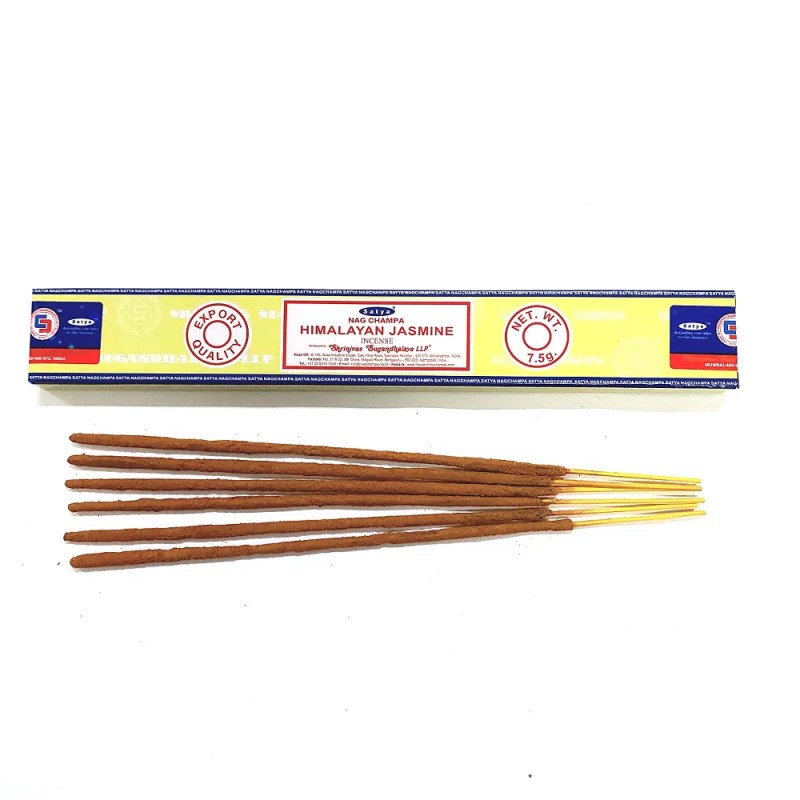
Satta Nag Champa Incense
Shopping again? No. But again this is what I use. We all have different skin types, and this might work for someone else, but for me, no. I’m still sad I had to throw it away. Plants at the Govind Pashu Vihar Wildlife Sanctuary, Western Himalayas Importance of High Altitude Threatened Plants
Govind Pashu Vihar Wildlife Sanctuary is located in Purola Tehsil, Uttarakashi District, Uttarakhand, Western Himalayas, between 31°17′ to 35°55′ north latitude and 77°47′ to 78°37′ east longitude. Together, the Western and Eastern Himalayas constitute one of the largest biodiversity hotspots in India and one of 34 in the world (Synge 2005). According to Myers et al. (2000), biodiversity “hotspots” are areas that contain most of the world’s biodiversity within a small area. Furthermore, biodiversity hotspots can be defined as areas with unique characteristics of entire ecosystems. The sanctuary is located in the Uttarakashi district of Uttarakhand, the newly formed state of Uttar Pradesh (Figure 12.1: Maps 1, 2). As protected areas are important areas for conservation and diversity, scientific data should be collected and documented for all taxa. Therefore, it is important to assess the existing floristic diversity. For these reasons, the Govind Pashu Vihar Wildlife Sanctuary was selected for the biodiversity assessment.
Govind Pashu Vihar became a forest reserve in 1955 and is part of Upper.

Ton valley. The main area of the reserve was declared a national park in 1991 and covers an area of 472.08 square kilometers. The temple is named after Bharat Ratna Govind Ballab Pant and was designed by the former Tons Forest division of Rupin and Subin Ranges. The sanctuary is divided into three parts namely Rupin, Supin, Sankri. Each division is divided into two divisions, namely Himri, Parvat/Satta, Naitwar, Jakhol, Sankri and Taluka (Figure 12.1: Map 2a), and each division is divided into five times to control losses such as crime, poaching etc. to achieve development goals. Those who lived in the sanctuary were Rawain, Jaunsar and Gujar. The present plant diversity in the study area can be roughly divided into: 1. Subtropical pine forest, 2. Himalayan wet temperate forest, 3. Himalayan dry temperate forest, 4. Subalpine forest, and 5. Moist alpine scrub (Champion and Seth 1968) .
The Himalayas Are Melting Fast, The Danger Of Drinking Water Is Increasing… Know What The Reports Say. Reports Say Himalayas Warming Faster Than Global Average
Hooker and Thomson (1855) described in detail the flora of the Garhwal Himalaya, including the current study area, in their Flora Indica. whore too
His collaborators dealt with various species in The Flora of British India (1872-1897). Several botanists have carried out botanical studies in the area, such as Keshwan in 1897; Machinnon in 1889, 1897-1898, 1903; Gollen in 1889; and Gamble in 1893 (Burkill 1965). Atkinson’s (1882) work on Himalayan flora, with specific mention of Kumaon, Garhwal, Nepal, and Tibet, and Duthie’s (1903-1929) Garhwal Himalaya flora are easily considered among the great contributions to the field. Some researchers such as Deva and Naithani (1986), Garg (1987), Aswal et al. (1988), Dangwal (1993) and Nautyal (1996) endeavored to study the flora of the Garhwal Himalaya, involving some families or groups in a given area. Important information can be obtained from Blossoming Garhwal Himalaya (Polunin and Stainton 1984), Blossoming Garhwal Himalaya (Rawat et al. 1985), Blossoming Garhwal Himalaya (Stainton 1988) and Blossoming Garhwal Himalaya (Dang 1993), Flora of Naithani. 1984, 1985), Tons Valley Flora by Rana et al. (2003), Flora of Uttarakhand – A review by Uniyal et al. (2007), and the flora of Gangotri National Park, Western Himalayas, by Pusalkar and Singh (2012). Other important unpublished works include Badoni (1989) Herbaceous Flora of Uttarkashi District, Bamola (1993) Lignosae Flora of Uttarkashi District, and Kandwal (2009) Grass Flora of Uttarakhand. There are also botanists such as Gibson (1954), Gupta (1955, 1957, 1960), Raizada (1958), Issar and Uniyal (1967), Naithani (1969), Rau (1974, 1975, 1981). Singh and Singh (1987, 1992), Gaur (1987, 1999), Rawat and Sharma (1992). Dangwal et al. (1993, 1995), Gaur and Painuli (1994), Uniyal et al. (1994, 1997), Rawat et al. (1994, 2001), Paramanand (2009). Manikdan et al. (2015), and Manikandan and Srivastava (2015a, 2015b) contributed to the Western Himalayan Flora.
This study aims to explore undeveloped areas under different geographical and climatic gradients in the potential area of the Govind Pashu Vihar Wildlife Sanctuary, which has been adopted with a rich overall diversity. The duration of each research trip is 20 days. Field observations are recorded in the field itself as well as details that cannot be inferred from herbarium specimens. Plant specimens were processed by drying, poisoning, mounting, stitching, and labeling (Fosberg and Sachet 1965; Bridson and Forman 1998). Collected specimens are identified by comparison with authentic specimens from various herbaria such as BSD (Herbarium of Indian Botanical Survey, North Regional Centre, Dehradun), CAL (Central National Herbarium, Howrah), LWG (National Botanical Research Herbarium, Lucknow), RRL/IIIM (Indian Institute of Integrative Medicine/Regional Research Laboratories, Jammu) and DD