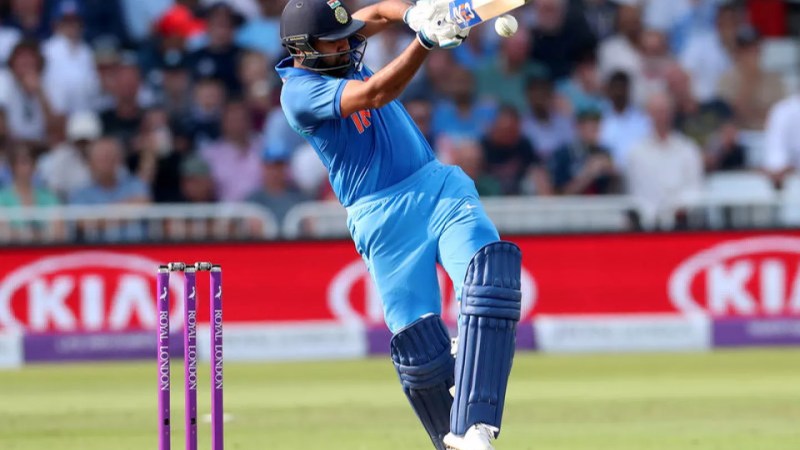
Extra In Cricket – Overs in cricket are runs not scored by the batting team but scored by the bowling team. This run is not added to the batsman’s score.
Extras in cricket are runs not scored by a batsman. These runs are awarded randomly to the batting team by the opposing team and are not added to the batsman’s individual score.
Extra In Cricket

Although these runs are added to the team total, they are listed separately on the scoreboard. A bowling team usually gives up more runs, but there are many times when teams give more runs than usual.
Giles Uninterested By Cricket World Cup Final ‘extra Run’ Claims
In the 1989 Benson & Hedges World Series, Pakistan lost a dominant 59 runs against the West Indies. It accounted for nearly 30% of West Indies’ runs as they managed to score 203 runs in 41 overs.
Pakistan repeated their success against Scotland 10 years later, this time scoring 35 per cent of Scotland’s 167 runs. Pakistan’s 59 runs against West Indies and Scotland are the most runs scored in a single ODI match.
In Test cricket, India topped the table with 76 more wickets in a single match against Pakistan in December 2007. Meanwhile, Turkey holds the record for most runs in a T20I match.
In the sixth match of the 2019 Continental Cup, the Turks played against the Czech Republic and scored 278/4 in 20 overs and lost 39 overs. This score is currently the highest joint team score in T20 cricket.
Extra England Run May Have Been A Mistake In World Cup Final
Also, the umpire can call a no-ball if he suspects a bowling error. In order for the ball not to be declared, the ball must not be thrown and the pitcher must not bend his hand or give it.
The result of a no ball is that the batted ball cannot be thrown in any way except by jumping on the next pass. But this applies only to ODIs and T20Is.
Indian Masala League | Grade 8 | | Hardik Pandya • Sanju Samson • KL Rahul • Faf

ICC Womens T20 World Cup Europe Part 2 Qualifier 2023: Know Schedule, Match Timings and Watch Live in India. The last time the Cricket World Cup came to England was in 1999. Manchester City remained in the Second League; 230 was usually the winning score in one-day international cricket; England hoped that Ian Austin and Vince Wells would win the World Cup.
Not Paying ‘extra Money’ To Sl For Touring Pak: Pcb Ceo On Cricketnmore
Rule changes are often the catalyst for change in sports. The introduction of the three-point line in basketball created a new type of long-range shooting, making the traditional players who dominated the rim less important. In football, the back pass rule was abolished in 1992 and defenders were prohibited from tackling back passes, which encouraged defenders to pass the ball.
Perhaps no other major sport has had its laws enforced as consistently as ODI cricket. Look at what was introduced and then scrapped after 1999: Powerplays in batting and bowling, where teams have the choice of when to apply fielding restrictions; Ball change after 35 overs; and super sub, 12
However, the new rules favor the batsmen. It used to be that only two men outside the 30-yard circle were allowed a punt for the first 15 carries, and then five, but now two men are allowed for the first 10 carries and four on the 11th.
Over and then five runs for 10. After the bowlers have bowled a no-hit ball – a high full ball and no ball on the front foot – the batsmen can now take a free.
Fresh From Double Ton, Warner ‘extra Motivated’ To Do Well In India
Perhaps the most significant change has to do with the ball. Since 2012, two new balls have been used in ODIs, so it is still difficult for batsmen to hit and bowlers rarely produce reverse strikes. Best of all, the ball is a Kookaburra, and it never tips: Duke’s only World Cup game was in 1999, when the ball spins unbelievably.
Since 1999, the history of ODI cricket has reset the norms with a cocktail combination of better batsmen, better bowling and rule changes to raise the bar. What was once unheard of has become almost commonplace: England have chased down 300-plus twice in ODI history until the 2015 World Cup. Since then, they have done so nine times.
First, international teams scored 300+ every 11.5 innings in 1999; Since 2015, teams hitting first have hit 300+ every 3.5 innings. Overall, the average first round pick went from 219 to 247 in 2018. If this seems less than intuitively true, the explanation is that the increase in points allows the team to take bolder risks and continue to attack when they lose quickly. wickets – at times, even in England had a tendency to explode.

Twenty 20 is, of course, at the heart of this story. This format has forced the batsmen to bat more and more early. Instead of teams with a few popular six-hitters, almost all team values have become standard.
Ind Vs Pak: India Deploy Support Staff And Extra Players Across Boundary To Save Time
In sports, one skill is improved and then another is added to challenge it. Something very different happened in ODI cricket: batting evolved faster than bowling. It’s not all about T20: After all, the bowlers have also played their own format and can bring out the same shtick used in T20 to stop ODI batsmen.
As a rule, the basis of all combinations is a physiological imbalance: batsmen can train more than bowlers, and this has become more professional in a critical period. So while reverse spinners have become common, two-sided spinners remain indispensable as old-fashioned spinners.
To understand how much the game has changed, consider that Michael Bevan, the 1999 world champion and the best batsman of his age, hit just one six out of 443 balls in his ODI career. Beavan’s skills improved with both sharp singles and good positioning.
The pressure to score faster means such players simply don’t exist today: even Joe Root, England’s most comfortable six-ball batsman, hits three times as many sixes and 1.5 times more runs than Bevan. It shows not only the number of trips recorded, but also the change in the segments recorded. The number of sixes has doubled – from 118 in 1999 to six in 59 last year. Twenty years ago, the limit accounted for 41 percent of all runs; Now, they occupy a shadow below the middle. All over the world sharp players are beaten with powerful strokes.
Ind Vs Nz: “looks Like Mini Rohit Sharma, He Has Extra Time”
They were called dibbly-dobblers: even the name was offensive. A pitcher of this type takes a few steps and then hits the ball slightly off the crease line of the stumps at less than 80 mph, sometimes much less, usually only a short distance. The lack of pace was an advantage as it was difficult for the batsman to hit hit after hit. Therefore, after the first 15 overs are over, captains can place five permitted players outside the 30-yard circle, usually on long, deep, point, square leg or length – where the batsman may be be hit It was a boring center of excelsis.
The essence of Dibley-Dobler was probably Kiwi, and bald. In 1999, Chris Harris, the standard-bearer of this type of bowling, had all three. Harris, along with compatriots Gavin Larsen and Nathan Astle, led Australia to the semi-finals in Cardiff. England had their players, Mark Elham, the most successful player in the World Cup; Even Australia channeled the spirit of the dibley-dobbler with Tom Moody.
Today, the dibley-dobbler has almost disappeared and is restricted to a few batsmen who can bowl in an emergency and is not the first choice of bowler. Changes to the pitch boundary didn’t help: teams can now only field four players outside the circle at intermediate intervals, which is hampered by the use of two new balls at the start of games, which make the ball less narrow and harder. . hit in the middle.

In fact, the dibley-dobler disappeared due to Darwinian evolution. A generation ago, international batsmen would respectfully welcome dibley-dobblers in the middle overs, reflecting their vulnerability and fewer shots behind the wicket. Now they treat dibble-dobblers like cats and mice, and other archers have to play middle ball.
I Understand, They Wanted Extra Money’: Manish Pandey Opens Up On Lsg Exit
In the 1999 World Cup, England conceded just 15 goals in five games – 12 from Robert Croft and three from part-timer Graham Hick. England are expected to play more matches this time with Adil Rashid and Moeen Ali
Extra cover in cricket, radio 5 live extra cricket, cricket extra data, cricket unlimited extra plan, buy extra data cricket, cricket wireless extra data, extra cover net live cricket, extra large cricket helmet, extra run in cricket, extra large cricket keeper, cricket extra live, cricket unlimited extra