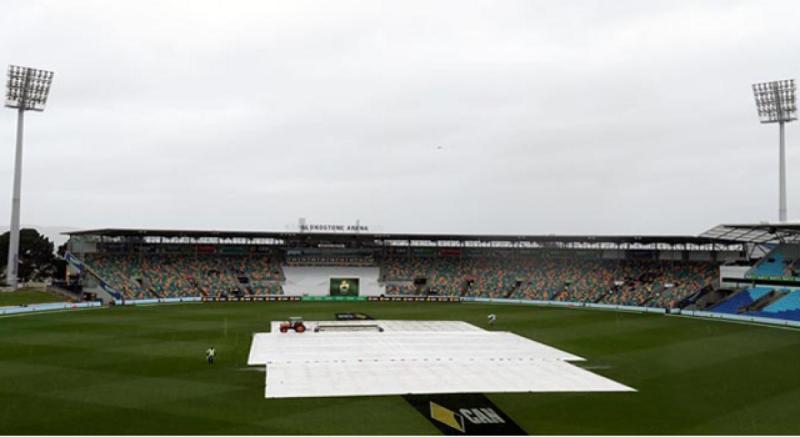
Bellerive Oval – Bellerive Oval, commercially known as Blundstone Ara for sponsorship reasons, is an Australian rules cricket and football ground located in Bellerive, an east coast suburb of Hobart, Australia, with a capacity of 20,000, it is the largest capacity stadium in Tasmania . It is the only casino in Tasmania that hosts international cricket matches.
The stadium is home to the state cricket teams, the Tasmanian Tigers and the Hobart Hurricanes, as well as international Test matches since 1989 and one-day matches since 1988. , who play three home games each season at Vue. The stadium has been significantly remodeled to accommodate such venues.
Bellerive Oval

This section requires additional citation for verification. Please help improve this article by adding citations to reliable sources in this section. Unsourced content may be challenged and removed. (February 2016) (Learn how and how to remove this template message)
Hobart To Host 5th Ashes Test In Day Night Format
This section may need to be rewritten to meet Wikipedia’s quality standards. You can help. The talk page may contain suggestions. (December 2021)
Football and cricket were first played at what is now Bellerive Oval in the mid to late 19th century. In 1884, the first recorded football match from the area was played between Carlton and Bellerive. In 1913 the land between Bellerive Beach, the Church and Derout Streets was sold to Clare Council. A year later, Bellerive’s new recreation ground was ready for use.
The land was hardly changed until the mid-1980s. During this time, the ground was cleared, leaving only the top half of the players visible from the other side of the ground. The players’ hut was where the main pavilion is now. There was a hill on the outside (where the hill is now) that could accommodate two sets of cars, the small scoreboard was on the outside near where the electronic scoreboard is now, and the time clock sat around halfway up the training light tower. . The police cab sat up straight,
In the northeast corner of the oval. The concrete cricket pitch served local junior teams until the 1956/57 season when it was replaced by grass.
A General View Of Bellerive Oval
In 1948 Clare Football Club, who were on the ground, applied to join the Tasmanian Football League and the ground was to be upgraded to TFL standards.
Some small improvements were made in the 1960s, club rooms were built in 1961 and a small grandstand (with around 500 seats) and a new PA system were installed in 1963.
In 1977, Tasmania was accepted into the Sheffield Shield and the TCA drew up a plan to move its headquarters from the TCA Ground on the Domain to the new oval. Bellerive Oval was better than KGV Oval and North Hobart Oval. $2,200,000 was spent on new stands, practice grids, a mound, a new surface and a square bullpen, the old TCA Ground scoreboard was relocated and the masterpiece, the three-tiered Members’ Pavilion, was built.

The newly renovated ground was opened for the 1986 TFL Statewide League game between the Programs and Hobart, which the Programs won in front of a crowd of 3,562. that season.
File:bellerive Oval Hill.jpg
The move came in 1987 under TCA president Des Rogers during the first international match between Sri Lanka and New Zealand on 12 January 1988 in front of a crowd of 6,500.
The first Test match in Tasmania was played at Bellerive between 16 and 20 December 1989 between Australia and Sri Lanka.
In 2007 the Tasmanian Tigers won the state’s first Pura Cup and in 2008 the stadium hosted its first Ford Ranger Cup final, which Tasmania also won.
The Oval became the first senior cricket facility in Australia to sign a naming rights sponsor in October 2011. A deal with Blundstone Footwear added the “Blundstone Ara” name.
Premium Stock Video
In 1999, the Federal Government announced that $5 million would be invested to upgrade Bellerive. TCA contributed $10 million to a loan from the State Government and Clare City Council contributed $1 million for a $16 million improvement opportunity. The first part of this upgrade was modern internal networks. Next came the 6,000-seat South Stand, which blocked the winds and Dervt views and featured a new media display. The latest of the upgrades was the new members area, complete with a new perimeter and test gates. The members’ area includes press and radio areas, corporate boxes and dining rooms, as well as players’ areas, members’ bars and TCA offices. The rebuild was officially opened on 11 January 2003, when a packed crowd of 16,719 (official capacity 16,000) saw a one-day match between Australia and England, a victory for Australia. Australia’s hero was Tasmanian Tiger Shane Watson, who completed the tribe’s most dominant bowling.
To allow one-day matches, four light towers were installed in 2009 at a cost of A$4.8 million, enabling One Day International (ODI) and Twty20 cricket matches to be played there.
The ground was earmarked for further redevelopment until 2015, with the State Government committing $15 million to expand the South Stand and Members’ Stand, increasing the ground’s capacity to over 20,000 for the 2015 Cricket World Cup as well as the Test Ashes. the future and the opportunity to lock in a long-term commitment to AFL games. The Tasmanian AFL is also considering moving its offices to the ground as part of the redevelopment.

At the official launch of the closed stadium, it was announced that the new stand would be known as the Ricky Ponting Stand and the existing South Stand as the David Boon Stand.
Hobart To Host Fifth Ashes Test
As well as being home to domestic and international cricket and the now Tasmanian State League Clarce Football Club, Bellerive Oval was home to the Tasmanian Devils in the VFL in 2003. The first game attracted a record VFL match crowd of 970 from 1986–6. View also hosted two Tasmanian finals, one against Geelong (4,800) and 10,073 in the semi-final against Port Melbourne. who beat Port Melbourne.
Richmond were considered the frontrunners, but in July 2010 North Melbourne were the most likely candidates because they were willing to move more than two games.
On 7 June 2011, the North Melbourne Football Club announced a new three-year partnership agreement with transport company TT-Line, who announced their intention to sponsor North Melbourne’s home games at Bellerive Oval in Hobart. Between 2012 and 2014, North Melbourne played two home games a year at Vio.
The first game was played on 8 April 2012 in Round 2, where North Melbourne defeated the newly formed Greater Western Sydney Giants by 129 points. The original three-year contract was revived and extended for a further two years when Hobart City Council and TT-Line (Spirit of Tasmania) agreed to sponsor North Melbourne to play three games a year in 2015 and 2016. A contract was signed new in 2016 not included in the table. The current arrangement, which runs from 2017 to 2022, allows North Melbourne to continue playing three games each season at Bellerive Oval.
Tasmania And South Australia Reunited In Wncl Final At Bellerive Oval
On 14 January 2003, the record number of one-day internationals for Bellerive Oval between Australia and England was 16,719 before the redevelopment.
The first international match was played on 12 January 1988 in a One Day International between New Zealand and Sri Lanka which attracted an international crowd of 6,180 in Hobart.
On 21 February 2010, a Twty20 international match between Australia and the West Indies attracted a crowd of 15,575. This was the first day-night international cricket match played at Bellerive Oval.

The biggest attendance at Bellerive Oval since the Ricky Ponting Stand was added was 18,149 for the 2015-16 BBL match between Hobart Hurricanes and Perth Scorchers on 10 January 2016. 17,844 for AFL Game 6 on 10 January 2016. Melbourne v Richmond on June 3, 2016 at Bellerive Oval the record crowd for an AFL game.
Bellerive Oval Hi Res Stock Photography And Images
Metro buses are available to and from Bellerive Oval and there are ferry services from Hobart City to Bellerive Wharf. The development of the international environment has greatly exceeded the ability of the local infrastructure to properly manage the large flows of visitors who try to reach the site. In particular, there is little provision for spectator parking. Therefore, a large number of vehicles are parked on the nearby streets where such events take place, leading to access problems for locals and the need for traffic control measures.
In an attempt to address parking and access issues, the development of the Oval has greatly affected the surrounding areas and particularly the Bellerive Rotary Park between the Oval and the beach.
This park is on land owned by Clarke Council
Bellerive hotel luang prabang, hotel bellerive, bellerive cemetery, bellerive apartments houston tx, bellerive, hotel bellerive zermatt, bellerive barbados, hotel bellerive lausanne, kroger bellerive, bellerive luang prabang, bellerive apartments, bellerive zermatt